
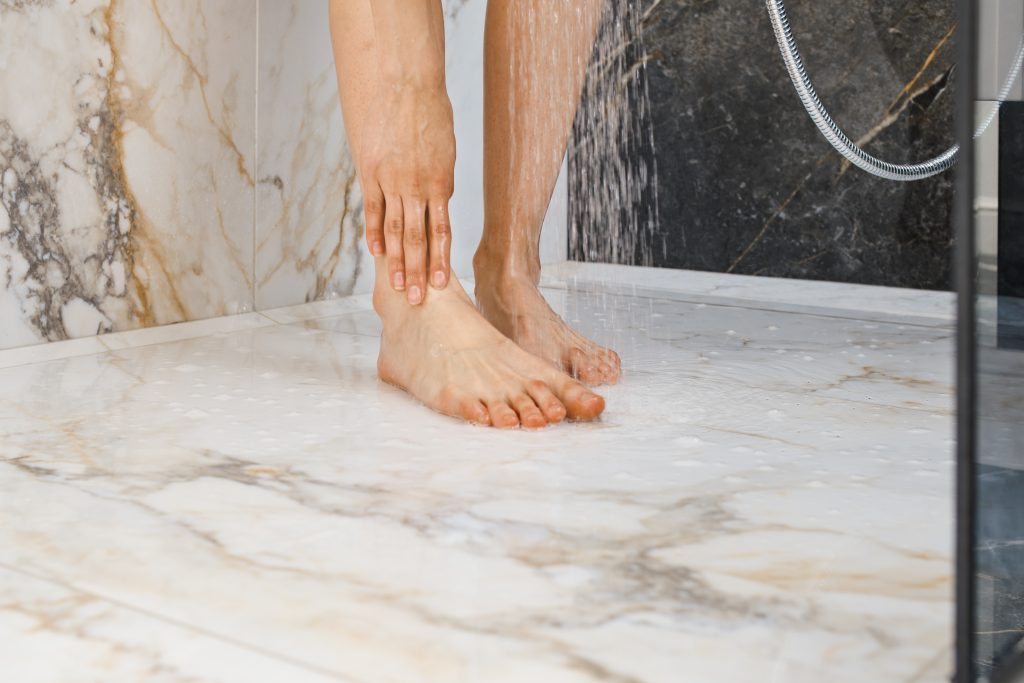
Bathroom floors take a beating. Wet feet, a dripping toddler fresh out of the tub, steam from a twenty-minute shower, and in January, slush tracked in from the front hall. You also walk on this tile barefoot, usually half-awake, sometimes in the dark.
So the rules change. A tile that looks great on a kitchen wall can be a real hazard on a bathroom floor. Here’s what Montreal homeowners should know before they commit, from slip ratings and tile size right down to grout and heated floors.
Why Bathroom Floor Tile Has Different Rules
Water is the obvious reason. Every bathroom floor gets wet, and wet tile is where a lot of household falls happen. Space matters too. Most bathrooms in Montreal plexes and older homes are tight, so every choice you make on the floor shows.
Then there’s humidity. The floor has to handle daily swings in moisture without cracking, staining, or letting water reach the subfloor. That’s why your first questions in the showroom should be about performance. Looks come second (and with the right tile, you don’t have to give anything up).
Slip Resistance: What the Standards Actually Mean
In North America, floor tile grip is measured as DCOF, the dynamic coefficient of friction, using a test called ANSI A326.3. It tells you how much traction a tile gives when your foot is already moving, which is exactly when people slip. Higher numbers mean more grip.
For indoor floors that get walked on wet, the standard sets a minimum wet DCOF of 0.42. A 2021 revision added tougher categories, including Interior Wet Plus at 0.50 or higher. Treat 0.42 as the floor for a bathroom. Inside a shower, or in a home with young kids or aging parents, look for 0.50 and up.
One catch. No tile is slip-proof. Soap film and bath oil can undo a good rating fast, and a matte look doesn’t guarantee a high number. Ask for the spec sheet.
Material: Which Tile Works Best on Montreal Bathroom Floors
Porcelain is the safest bet. It’s dense, absorbs almost no water, and stands up to years of mopping and foot traffic. Glazed ceramic can work well in a powder room or guest bath, as long as it’s rated for floors (a PEI rating of 3 or higher is a good residential benchmark).
Natural stone like marble, travertine, or slate feels wonderful underfoot. It also needs regular sealing. If you go with stone, choose a honed or textured finish. Polished marble on a wet bathroom floor is a slip waiting to happen.
Size and Format: What Works on Montreal Bathroom Floors
Large-format tile is everywhere right now, and it can look stunning. In a bathroom, though, size affects safety. Fewer grout lines means less grip, so a big tile needs a strong DCOF rating to compensate.
Big tiles also demand a flat subfloor. Plenty of older Montreal homes have floors that dip and wave, and a 24×48 tile will expose every flaw. For many bathrooms, 12×24 is the sweet spot. Inside the shower, small mosaics (2×2 or smaller) make more sense. They follow the slope to the drain, and all those grout lines add traction.
Colour and Pattern Strategy for Small Montreal Bathrooms
Light, warm neutrals make a small room feel bigger. So does continuity: running the same tile across the floor with tight joints and matching grout cuts down on visual noise and lets the eye travel.
Want a statement? A patterned porcelain floor can be the star of a powder room, as long as the walls stay quiet. Herringbone laid across a narrow bathroom can make it read wider. And if you’re torn on colour, mid-tones are the most forgiving. Very dark floors show soap scum and water spots, while bright white shows everything else.
Grout for Bathroom Floors: The Details Most Homeowners Miss
Here’s the part people skip: movement joints. Where the floor meets the walls, the tub, or a change of plane, the joint should be filled with a flexible sealant, not grout. Tile expands and contracts, especially over heated floors, and a rigid joint at the edge is a common cause of cracked tile and popped grout.
Shower Floor vs. Bathroom Floor: Should They Match?
If you’re building a curbless shower, matching usually makes sense. The floor flows straight in, and the room feels larger. Many porcelain collections offer the same tile in a large format and a coordinating mosaic, so you can run 12×24 on the main floor and the matching mosaic inside the shower.
Contrast works too, as long as it looks deliberate. Keep the colours in the same family and let texture or format do the talking. Whatever you choose, the shower floor should carry the higher slip rating.
Underfloor Heating: Compatibility and Considerations
After a Montreal winter, heated bathroom floors start to feel less like a luxury. Tile is a great partner here because it holds and spreads heat well. Porcelain and stone both work nicely.
A few things to plan for. Most electric systems sit under the tile in a membrane or mat, and large tiles need full mortar coverage so the heat spreads evenly. Don’t switch the system on until the mortar has fully cured, following the manufacturer’s timeline. And in Quebec, the connection to your electrical panel has to be done by a licensed electrician.
Choosing a Bathroom Floor You’ll Live With for Years
The best bathroom floor is one you stop thinking about. It grips when it’s wet, cleans up easily, stays warm in February, and still looks right ten years from now. Getting there comes down to a few smart questions asked early: what’s the DCOF, is the subfloor ready for this size, and what grout and joints does the installer plan to use.
D’Amico Céramique has been helping Montreal and West Island homeowners answer those questions for more than 40 years. Bring your measurements and a few photos of your bathroom to the Pierrefonds showroom, and the team will help you find a tile that’s safe, practical, and genuinely yours.