

Walk into any tile showroom in Montreal right now and you will see the split immediately. On one wall, slabs the size of a coffee table. On the other, small mosaics and classic subway tile in tidy little stacks. Both are everywhere in current renovations, and both are right for very different reasons. The format you choose changes how a room looks, how long installation takes, how much it costs, and, in a city full of century-old triplexes and uneven subfloors, whether the tile will actually sit flat once it is down.
What “Large Format” and “Small Format” Actually Mean
In the tile industry, large format generally refers to anything with a side longer than 15 inches, though the term stretches to cover the oversized porcelain slabs now common in kitchens and showers, some running 24 by 48 inches or larger. Small format covers the other end: mosaics, subway tile, penny rounds, and anything roughly 4 by 4 inches or smaller. In between sits a wide middle ground of standard 12 by 12 and 12 by 24 tiles that most Montreal homes have used for decades.
The distinction matters beyond size on paper. Large format tile behaves differently during installation, requires a flatter substrate, and reads visually as one continuous surface. Small format tile is more forgiving on imperfect floors and creates texture through repetition rather than scale.
How Format Affects the Way a Room Looks and Feels
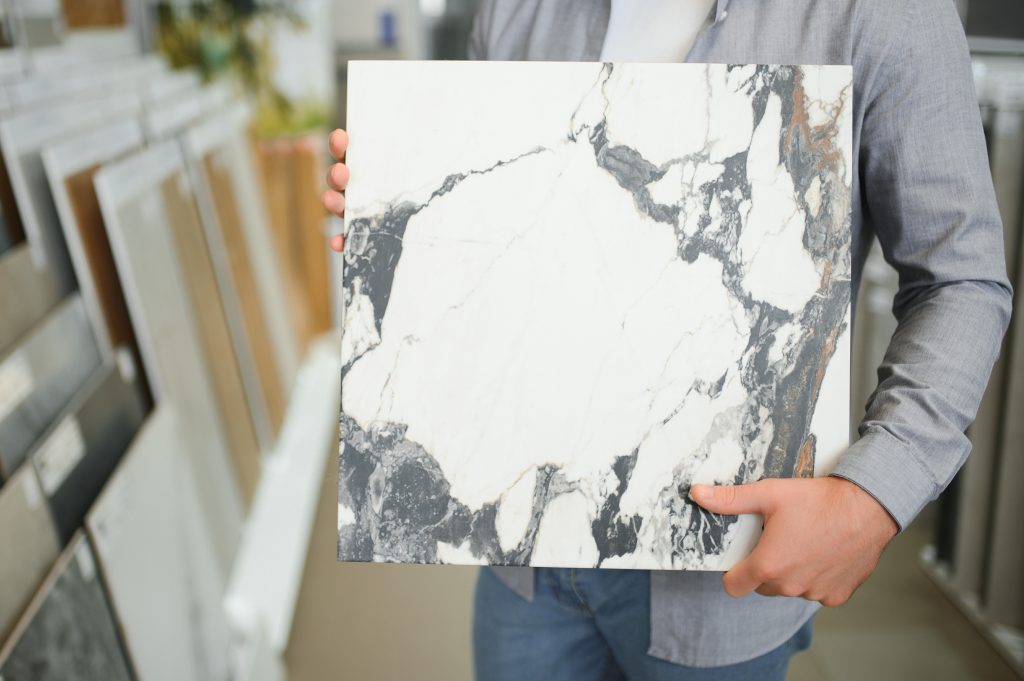
Large format tile minimizes grout lines, and fewer grout lines read as a cleaner, more expansive surface. A small bathroom tiled in large porcelain slabs can feel noticeably bigger than the same room finished in small mosaic, simply because the eye is not tracking dozens of grout seams across the floor. This is why large format has become the default recommendation for compact condo bathrooms and open-concept kitchens across Montreal’s newer builds.
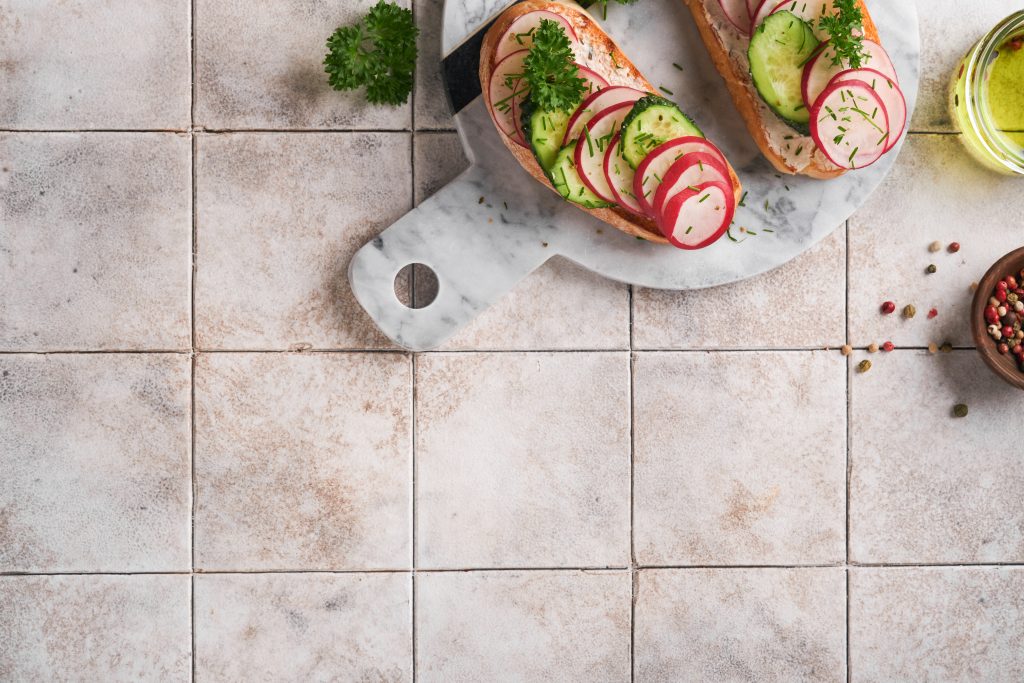
Small format tile does the opposite, and that is not a downside, it is a design tool. Mosaic and subway tile add texture, pattern, and visual rhythm to a space. A herringbone-laid subway backsplash or a penny tile bathroom floor brings character that a single slab of porcelain cannot replicate. In older Montreal homes, particularly Plateau walk-ups and West Island character properties, small format often suits the architecture better than a slab that reads as too modern for the surrounding trim and mouldings.
Neither format is objectively better. The right choice depends on the room, the light it gets, and the style of the rest of the home.
The Montreal Housing Reality: What Your Home’s Bones Allow
This is the section most tile guides skip, and it is often the most important one for Montreal homeowners specifically. Large format tile demands a flat, stable substrate. A subfloor that is out of level by even a few millimetres across a large slab will show it, either through lippage (uneven tile edges) or through visible stress cracks over time. Montreal’s older housing stock, especially pre-war triplexes and homes with settled foundations, frequently has floors that are not perfectly level.
This does not rule out large format tile in an older home. It means the subfloor often needs levelling compound or additional substrate preparation before installation, which adds cost and time that a newer condo build would not require. Small and mid-format tile is more tolerant of minor floor irregularities because each tile is smaller, so any given imperfection has less surface area to show itself across.
Before falling in love with an oversized slab for a century-old kitchen, it is worth having the subfloor assessed. That conversation upfront saves a renovation from stalling midway through installation.
Room-by-Room Format Recommendations for Montreal Homes
Kitchen Backsplash
Small and mid-format tile tends to work best here. Subway tile, hexagon mosaic, and classic 3-by-6 layouts have stayed popular in Montreal kitchens because they suit the scale of the space between counter and upper cabinets. Large format slabs are increasingly used as a full-height statement wall behind a range, but for a standard backsplash run, smaller format is usually the more practical and better-proportioned choice.
Bathroom Floors
Large format porcelain is the strong default for bathroom floors in newer Montreal builds and renovated condos, since fewer grout lines mean less maintenance and a cleaner look in a small footprint. In older homes with uneven subfloors, mid-format tile (12 by 24 or similar) often strikes the right balance between the clean look of large format and the forgiveness of smaller tile.
Shower Walls
Large format tile genuinely shines here. Fewer grout lines mean less grout exposed to constant water, which means less maintenance and a lower risk of mould over time. This is one room where the practical case for large format is as strong as the aesthetic one.
Living Areas and Entryways
Large format porcelain that mimics natural stone or wood has become a defining look for Montreal’s open-concept renovations, particularly where flooring runs continuously from kitchen into living space. The minimal grout lines support the sense of one unbroken surface, which is exactly the effect most open-concept renovations are trying to achieve.
Powder Rooms and Accent Walls
This is where small format tile earns its keep. A powder room is a low-commitment space to take a design risk, and mosaic, patterned cement-look tile, or a bold small-format accent wall gives a small room outsized personality without overwhelming the budget.
Practical Considerations: Cutting, Waste, and Cost
Large format tile is more expensive to install, not always because the tile itself costs more per square foot, but because it requires specialized handling. Slabs are heavier, more prone to cracking during transport and cutting, and typically require two installers to set safely. Cutting large format tile around outlets, corners, and plumbing fixtures also generates more waste per cut, since a mistake on an oversized piece cannot be patched the way a small tile can.
Small format tile costs less per piece to replace if damaged and is generally more forgiving for DIY-adjacent projects, though professional installation remains the better choice for anything beyond a small accent area. Labour time, however, often runs higher for small format simply because there are more individual pieces and more grout lines to lay and finish.
The honest cost comparison usually lands close to a wash by the time labour, waste, and substrate prep are all factored in. The decision should come down to the look and function you want, not a straightforward assumption that one format is automatically cheaper than the other.
The 2026 Montreal Trend Direction
Montreal renovations in 2026 are leaning toward a hybrid approach rather than an all-or-nothing commitment to one format. Large format porcelain continues to dominate main floors, showers, and open-concept living spaces, while small format tile is showing up deliberately in backsplashes, powder rooms, and accent details within the same home. Warm, natural stone-look finishes are outperforming the cooler grey palettes that dominated the last several years, and matte surfaces continue to gain ground over high-gloss finishes, particularly on floors where slip resistance matters.
The pattern across current Montreal projects is less about choosing a side and more about using both formats intentionally, large where scale and cleanliness matter, small where texture and character matter.
Conclusion
There is no single correct answer to large format versus small format. The right choice depends on the room, your home’s structural bones, and the look you are trying to achieve. What matters most is making that decision with a clear picture of what your specific space allows, not just what looks good in a showroom display. A conversation with someone who has seen how both formats perform across hundreds of Montreal homes, old and new, is worth having before any tile gets ordered.